

Bilingual Primary School in Bergamo
Most of the school day happens in English, taught by native speakers. Children cover the full Italian primary programme and the English Cambridge curriculum side by side, and move up ready for BBS Middle School.
80% of the week is taught in English in Years 1 and 2, 75% from Year 3.
English is the language of the classroom from the first day of Year 1, taught by qualified native speakers. Italian holds a protected place of its own: ten dedicated hours a week in the first two years, and around twelve from Year 3, when study skills enter the timetable to prepare the ground for Middle School.
- The full Italian primary programme, the same one every school in the country teaches
- In Italy this stage is called scuola primaria, the primary school for ages 6 to 11, from Year 1 to Year 5
- Italian taught as a subject of its own, with more dedicated hours than in many traditional Italian schools
BBS was founded in Bergamo in 2011 by Patrizia Canzoneri. The Primary School is state-recognised by the Italian Ministry of Education, a status known in Italy as paritaria, held since 2014: your child is inside the Italian school system from the first day.
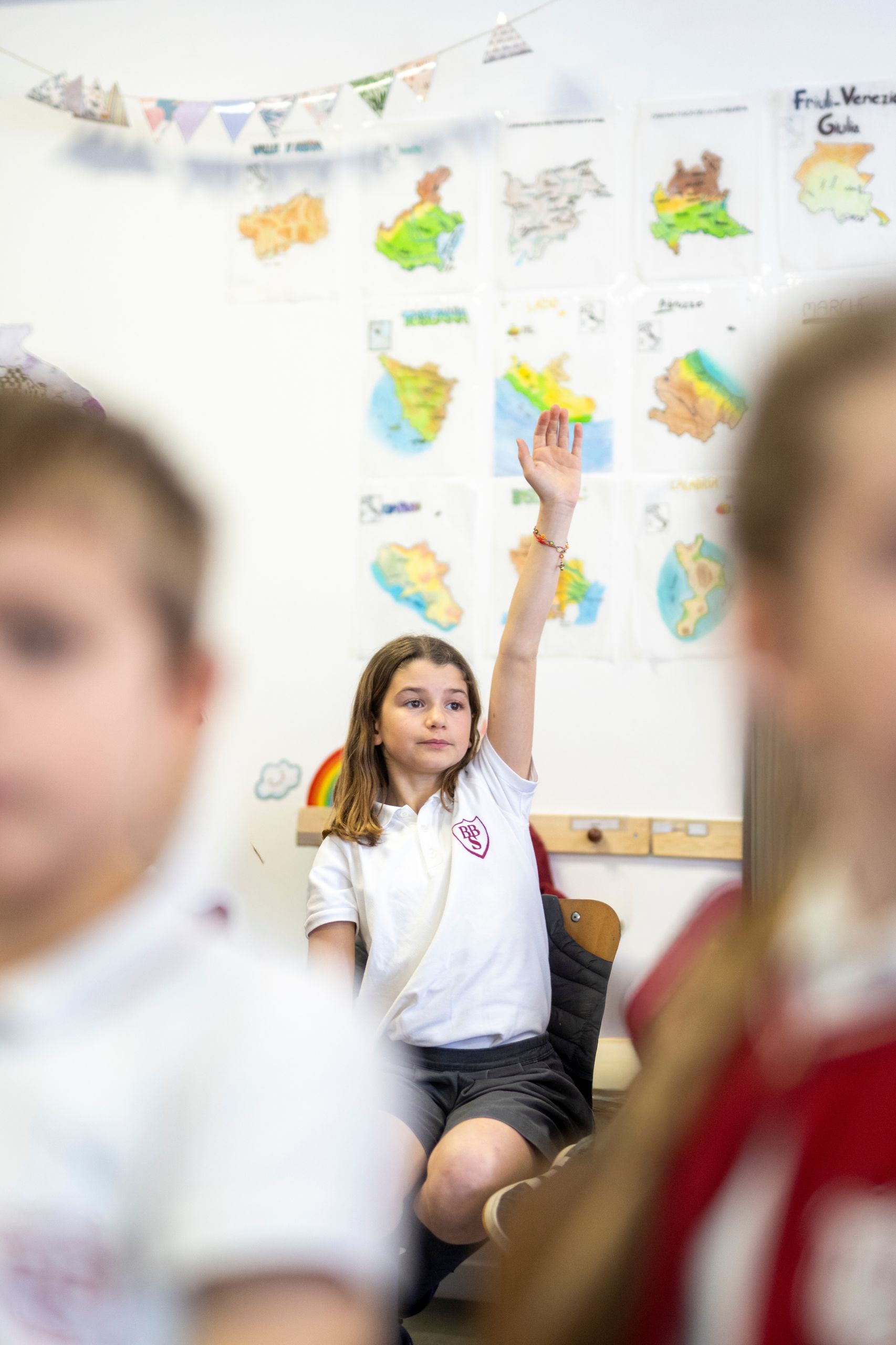
Everything an Italian primary school teaches, and Maths, Science and English twice over.
Those three subjects are taught to the Italian programme and to the English curriculum at the same time. The English one is written in England by Cambridge, approaches the same material with its own methods and vocabulary, and sometimes goes further: statistics, for example, is part of Cambridge primary Maths and waits until much later in the Italian system. Your child covers more ground than either programme asks on its own.
- English as a first language, from Year 1
- Mathematics including topics like statistics that arrive far later in the Italian syllabus
- Science hands-on, the way six-year-olds do their best thinking
- Italian, taught by qualified Italian teachers, all fluent in English too
- Ten dedicated hours a week in Years 1 and 2, around twelve from Year 3
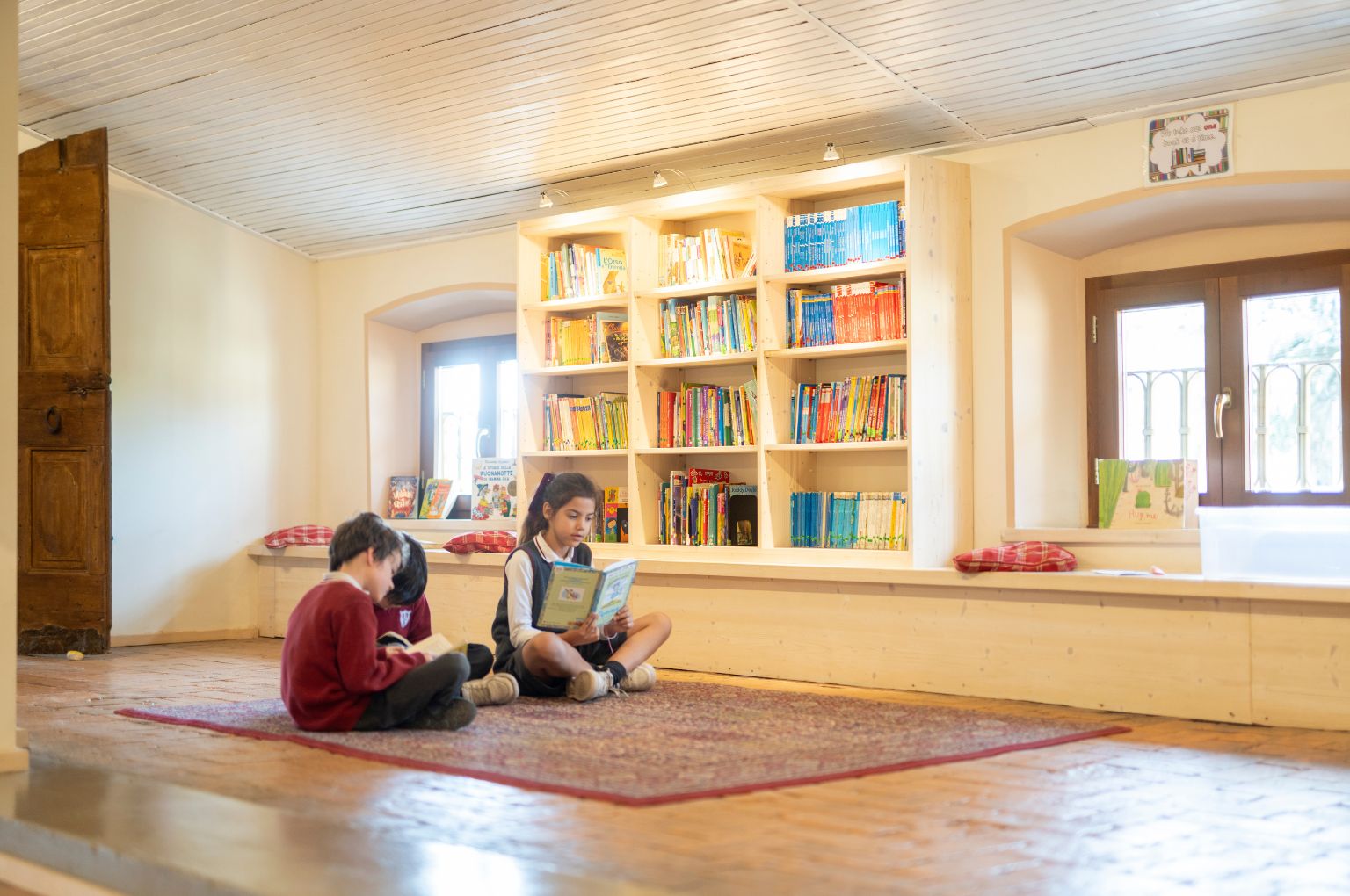
- Enough room for a child to love reading and writing in both languages
In Italy’s national school tests, BBS children score above the national average, in Italian too.
Once a year the Italian Ministry sets the same tests, the INVALSI tests, for every school in the country, in Year 2 and Year 5 of primary, so results can be compared between schools. The result worth reading twice: children taught 75 to 80% of the week in English finish primary ahead of the national average in Italian and in maths. These are our Year 5 results, from 2021/22.
Source: our published results · See the full set
Lessons start with a question to explore, and grow as your child does.
Teaching at BBS runs on the enquiry method: a topic arrives as a question, and children get to the answer by trying things out. What changes over the five years is how much is asked of them, raised one step at a time.
- Years 1 and 2 · The classroom works the way a six-year-old does: hands-on materials, textbooks in both languages, learning through doing, in continuity with how the Nursery teaches. A child who joins at six lands somewhere familiar.
- Years 3 to 5 · Learning turns gradually more abstract and more critical. ICT joins the timetable from Year 3. In Year 5, teachers who also teach in BBS Middle School start working with the class, so by June your child already knows the people waiting in September.
Along the way children pick up the working habits the Cambridge programme is designed around: solving problems, holding an argument, thinking for themselves, working with others.
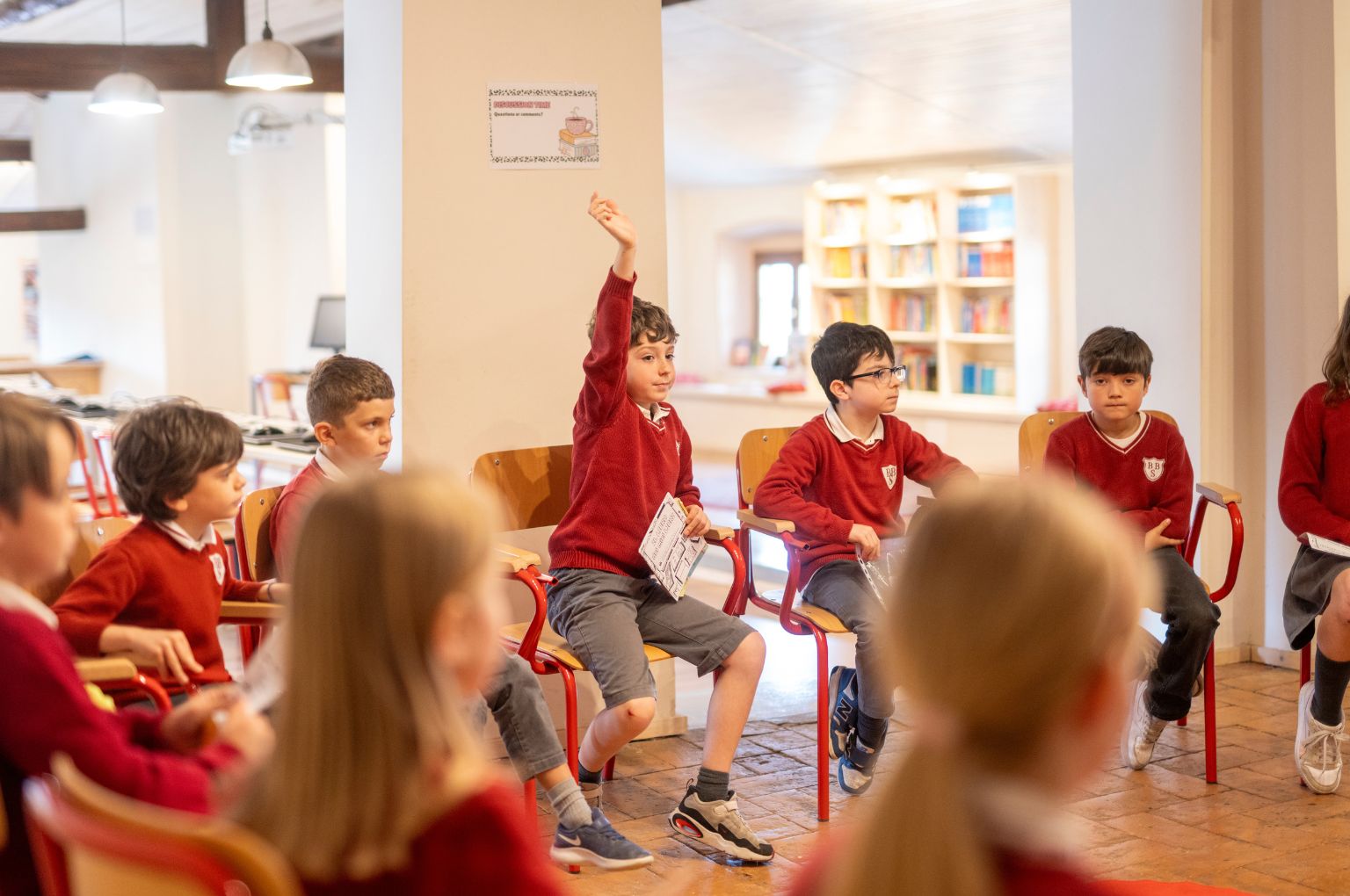
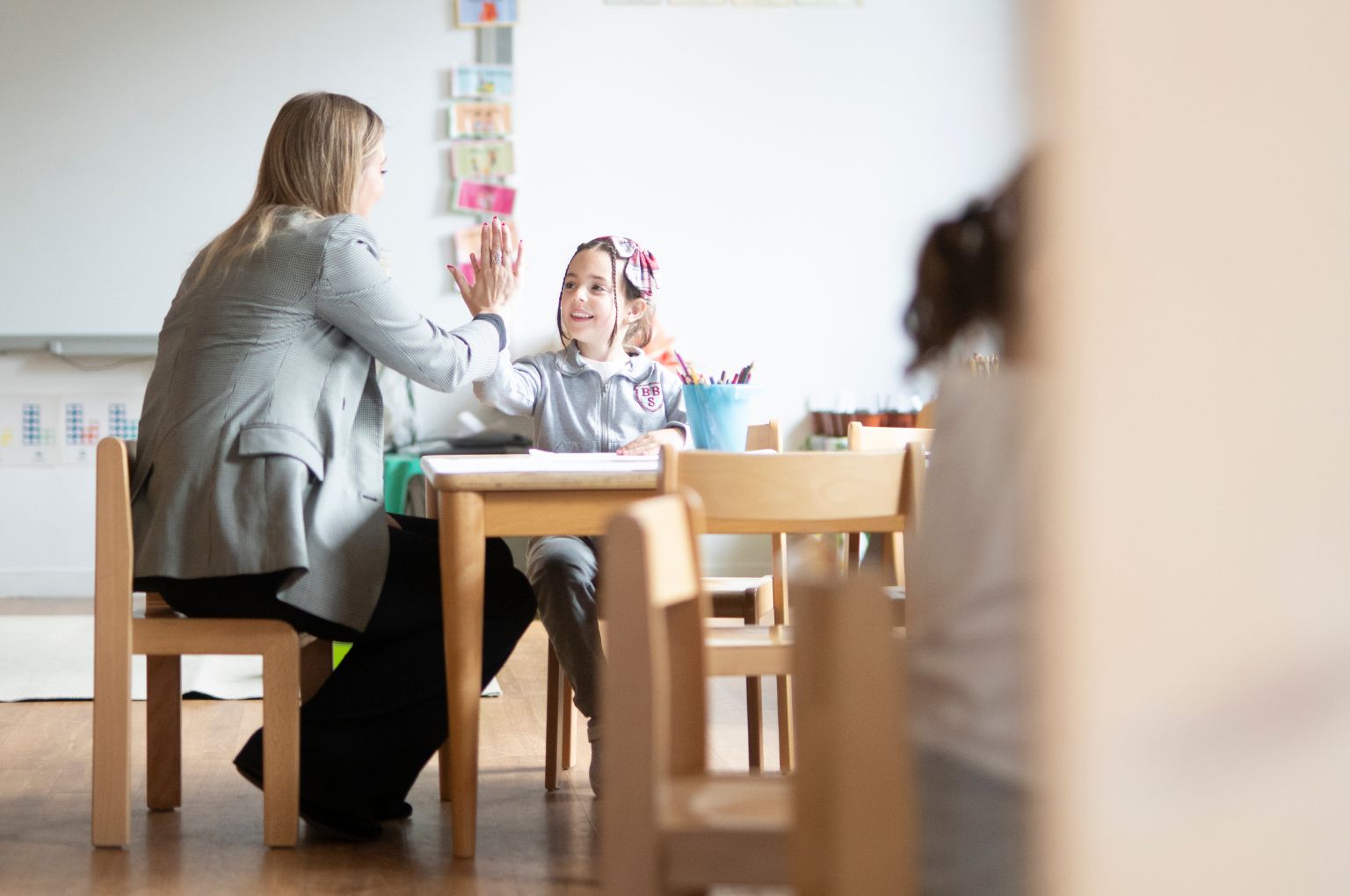
How your child feels at school has its own curriculum, and its own specialist.
Personal, social and emotional development is a taught curriculum at BBS, integrated with the academic ones, with its own objectives year by year. Behind it there is a person: the school counsellor.
- Subjects in English taught by qualified native speakers
- Italian lessons taught by qualified Italian teachers, all fluent in English
- Trained to lead by involving, so children feel free to say what they think in either language
- A specialist who works with children, with teachers and with parents
- Runs meetings, talks and workshops for families across the year
- Available one to one when a family wants help calibrating expectations
Homework is deliberately kept limited · free time is part of how learning settles
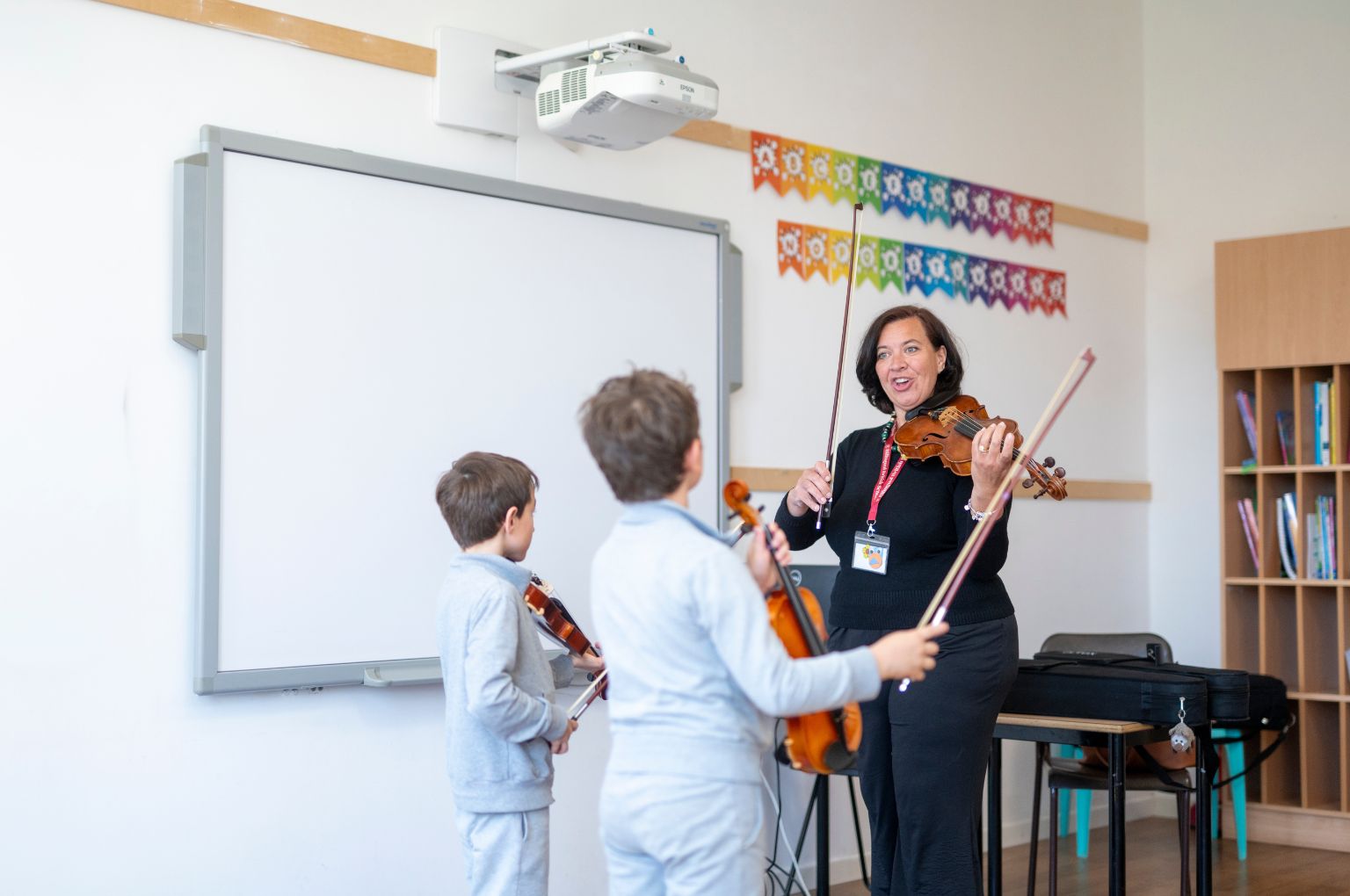
The violin from age eight, and a Christmas show that sells out in two hours.
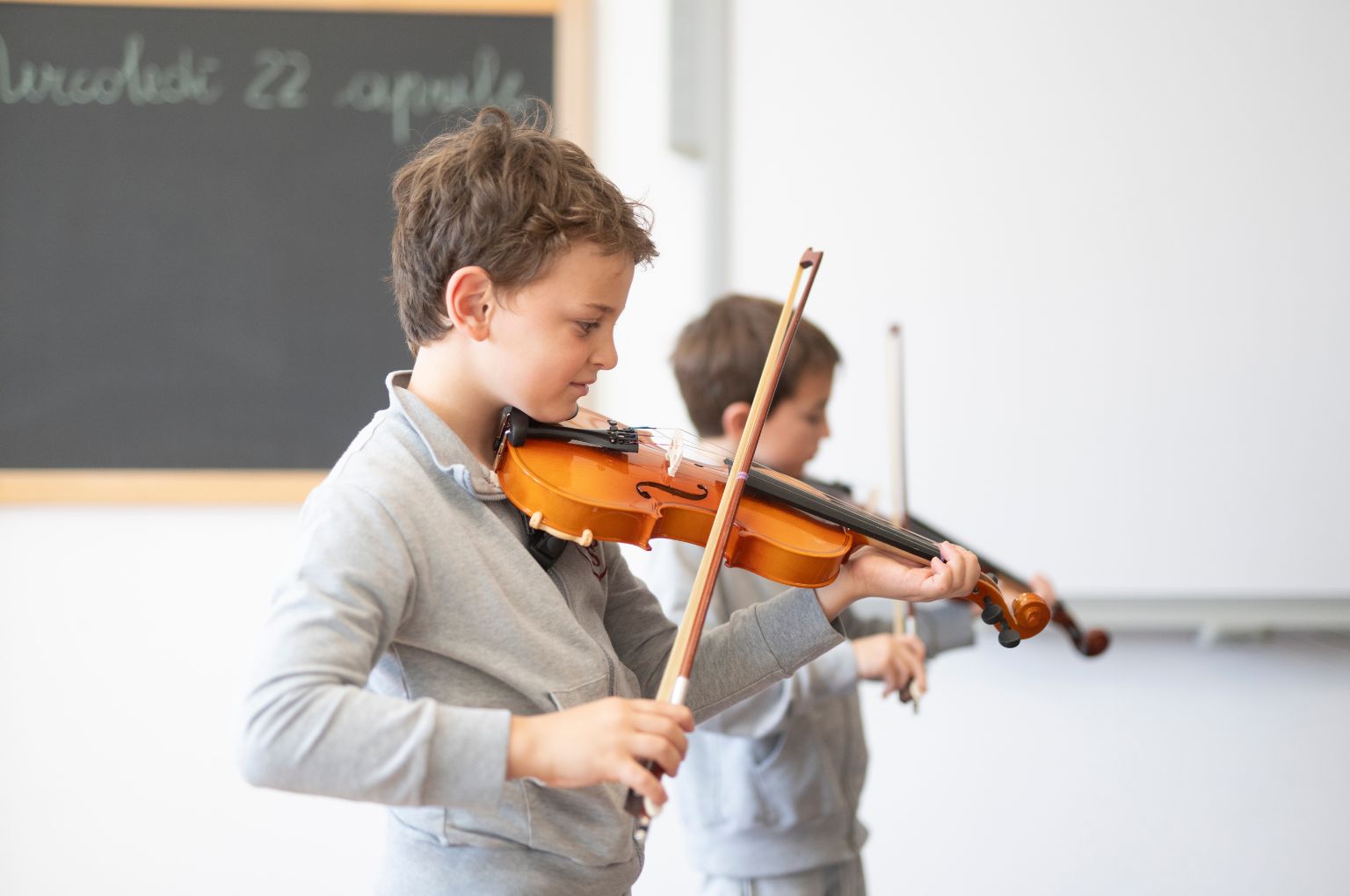
Every child starts the violin in Year 3, and the instrument changes as they grow through the school. Music lessons lead to the school choir, open from Year 3 in the British school tradition. The year’s work comes together on stage: a Musical, and a Christmas show that fills the theatre within two hours of tickets opening, with an audience well beyond the school’s families.
- Music, singing and acting sit inside the school week, taught progressively from the first year
- In primary the arts are made to be shown: children rehearse, perform and take a bow
- Former students name the arts as the thing they came to value most after leaving
School spills out into 18,000 square metres of century-old park.
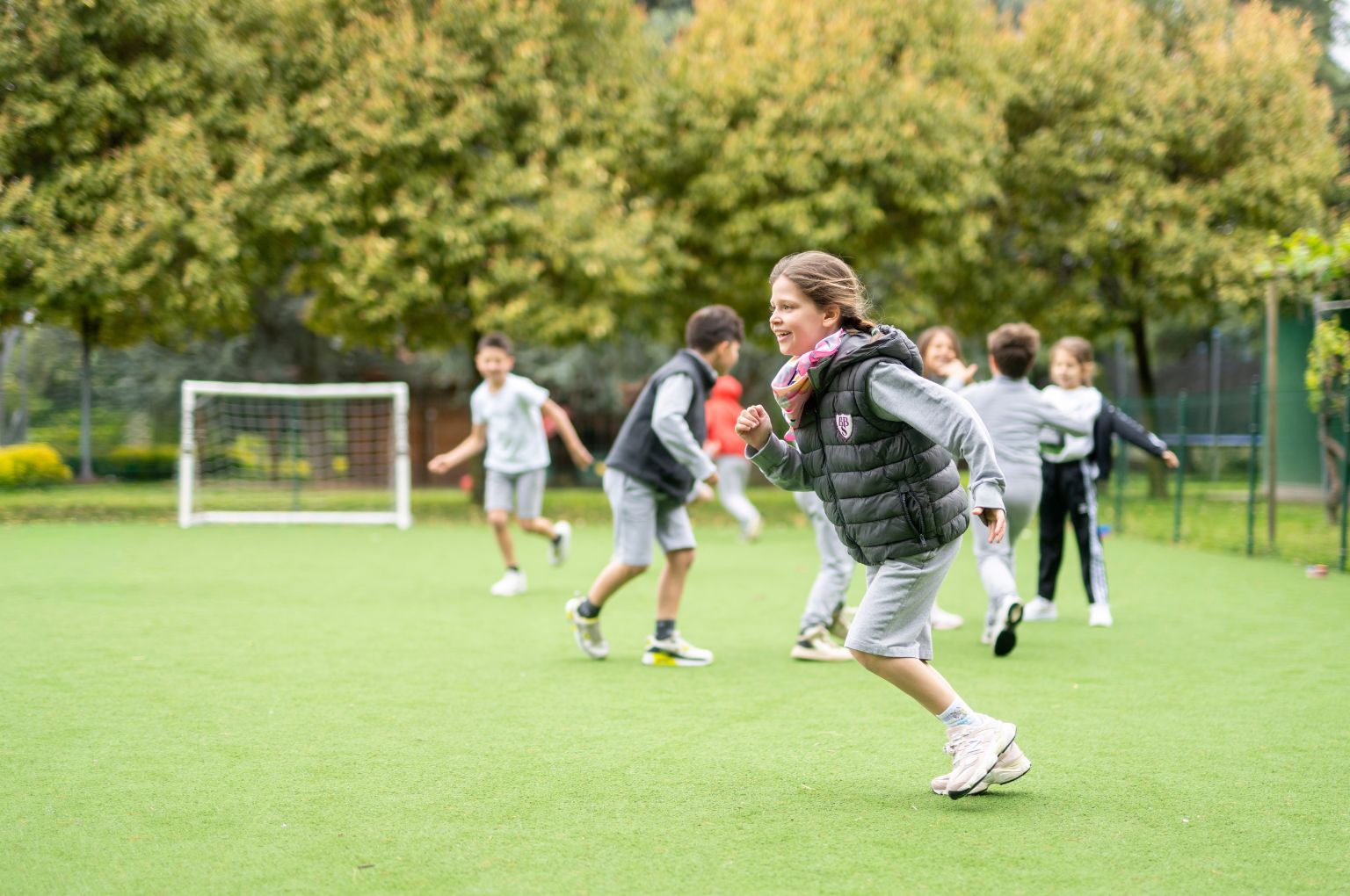
Sport at BBS happens mostly in the open air, led by a specialist PE teacher from the first year of primary. Break times use the park: a football pitch, an equipped play area, a fitness trail. And the timetable leaves the campus when it makes sense: swimming and skiing lessons complete the year, outside the school, with qualified instructors.
- A large gym in the park, used weekly for sports from both Italian and British culture
- A vegetable garden, and outdoor classrooms equipped with interactive whiteboards, set inside the park
- Sport teaching something fundamental to BBS: setting a goal, working with a team, reaching it
Even the youngest children have a say in how their school runs, and the school listens.
A historic villa on the Scanzorosciate hills, just outside Bergamo.
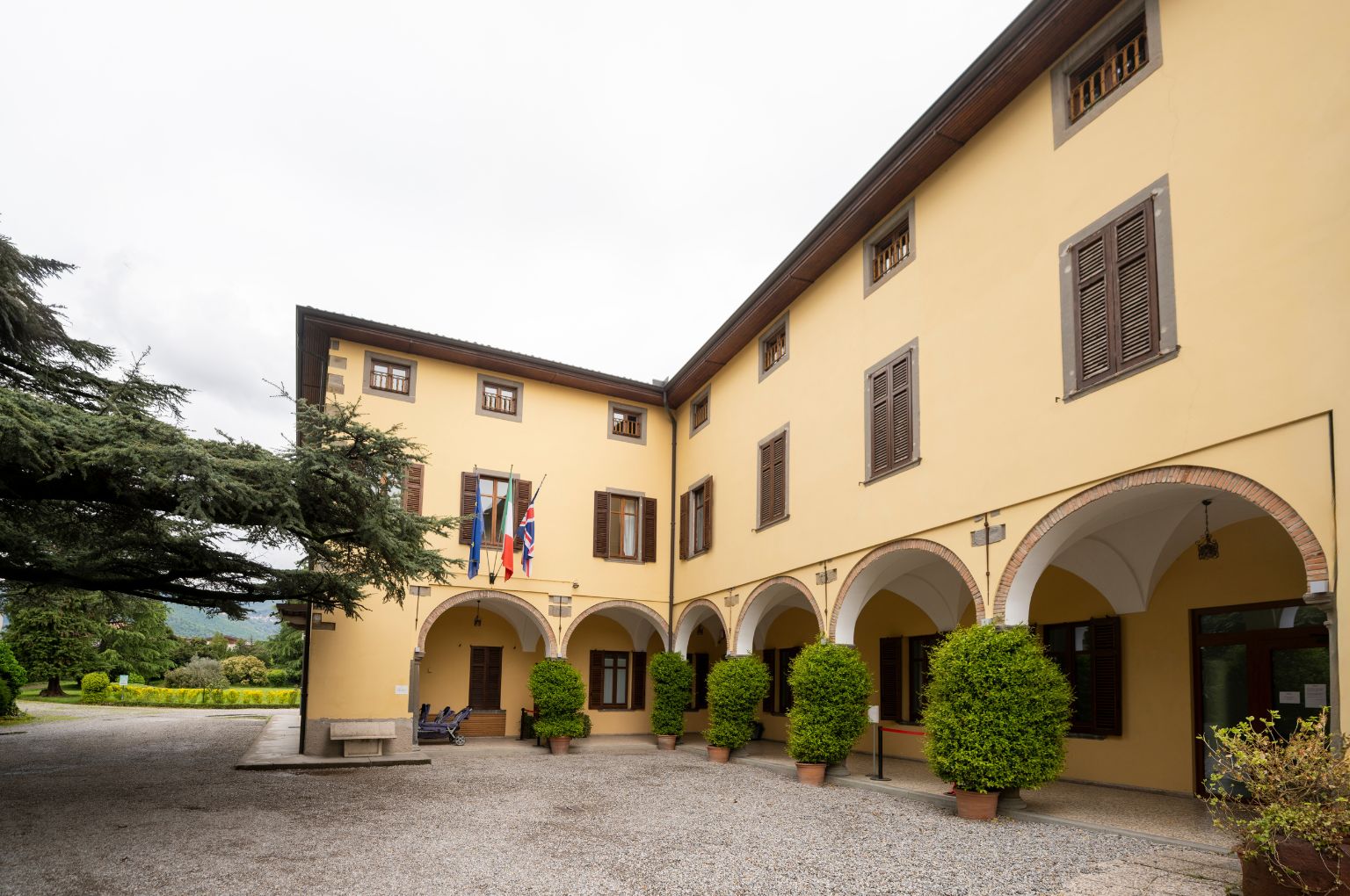
The Nursery and Primary School live in BBS’s historic site: a classical building with a vaulted portico and period oak floors, set in 18,000 square metres of park with hundred-year-old trees, at the foot of the Scanzorosciate hills.
- School buses serve the Bergamo, Brescia and Milan areas
- The campus is at Via Pietro Piccinelli 10, Scanzorosciate, Bergamo
- The canteen cooks balanced meals with organic, zero-km ingredients
- Special diets covered on medical certification
- Children wear the school uniform
- After-school clubs: individual instruments (piano, violin, drums, guitar), music, acting, dance, yoga and mindfulness in English, Football Club in English, judo, Chinese Club and Homework Club
- A summer camp entirely in English, with native-speaker teachers, held on this campus, grouped by age and level
A transfer to any Italian school stays open, at any time.
Because BBS is paritaria, state-recognised by the Italian Ministry of Education, the ministerial objectives are covered in full. If your family moves or your plans change, your child can transfer to any Italian school, state or private, at any point in the five years, and arrive having covered exactly what that school expects. Choosing BBS at six keeps every option open.
Year 5 ends with a child at home in two languages, and a place waiting at BBS Middle School.
By the end of primary, BBS children work in English across the curriculum and in Italian to the national standard, with the INVALSI results above as the proof. Then they carry on with us, in Bergamo.
- The same two curricula, with 75% of the week taught in English
- Children who complete BBS Primary move directly into BBS Middle School
- The teachers they met in Year 5 are already familiar faces
Joining starts with a conversation, and ends on the first day of school.
Children who complete BBS Nursery School move straight into Year 1. For everyone else, the path is four steps.
The first step is a conversation about your child. Fees are on our Admission and Fees page.
Questions families ask.
Come and see it for yourself.
Tell us about your child and their age, and our admissions team will arrange a visit: you will walk under the hundred-year-old trees, see the classrooms mid-lesson and hear what a school that lives in two languages sounds like on an ordinary morning.
Via Pietro Piccinelli 10, Scanzorosciate (BG) · bbschool.it

